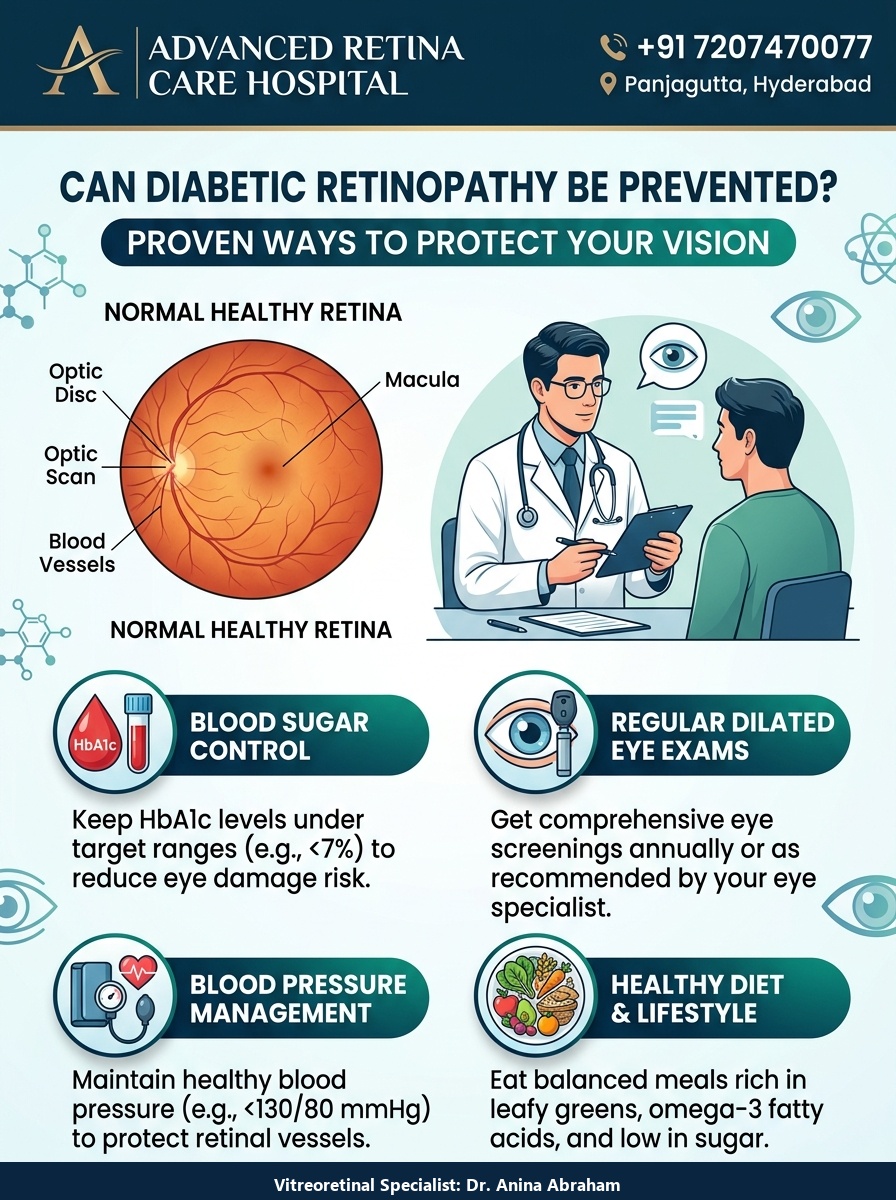
One of the most frequent questions asked by people living with diabetes is whether diabetic retinopathy can be prevented. The reassuring answer is YES: while diabetes carries a lifelong risk, the development and progression of severe eye damage can be dramatically reduced through proper metabolic management and timely screening.
1. Optimal Blood Glucose Control (HbA1c Target)
Maintaining stable blood sugar levels and keeping HbA1c within your target range reduces the risk of retinal blood vessel damage by up to 76%. Avoiding sharp spikes and sudden drops in blood sugar is critical for long-term vessel stability. Learn more about blood sugar control and retinal reversibility.
2. Strict Blood Pressure Regulation
High blood pressure places added hydrostatic strain on weakened retinal capillaries. Keeping blood pressure controlled (typically below 130/80 mmHg) significantly lowers the risk of macular edema and retinal hemorrhages.
3. Lipid & Cholesterol Management
Elevated blood cholesterol leads to hard exudate leakage and fatty deposits in the macula. Managing lipid levels with healthy diet and physician guidance keeps retinal vessels clear.
4. Regular Kidney Health Evaluation
Because the small blood vessels of the eyes and kidneys are closely linked, monitoring diabetic nephropathy and renal function helps protect retinal microvascular health.
5. Annual Retinal Examination
Annual screening with a retina specialist ensures any microvascular changes are identified and treated early before vision changes occur. Read our guide on why diabetic retinopathy is a silent threat.