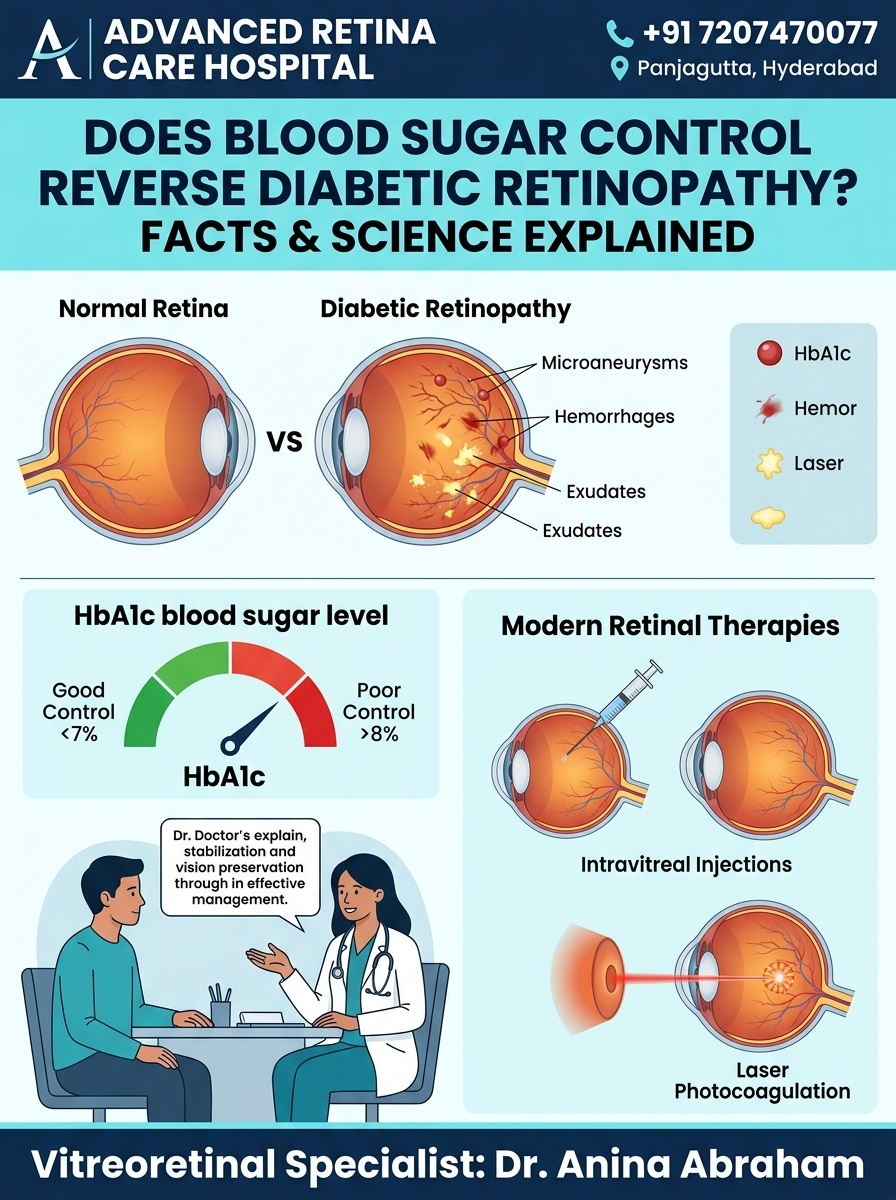
Patients often ask: 'If I get my blood sugar under control today, will my diabetic retinopathy disappear?' The simple medical answer is no. While good control slows down further progression, existing structural damage to retinal blood vessels cannot be naturally reversed.
Understanding Retinal Blood Vessel Damage
Diabetic retinopathy develops because chronic high glucose gradually damages the endothelial lining of tiny capillaries supplying the retina. As vessels close off, oxygen supply decreases, leading to microaneurysms, fluid leakage, and tissue swelling. Once these micro-vessels have closure or permanent structural damage, they do not regenerate naturally. Learn more about early silent stages of retinal damage.
Comparing Diabetic Retinopathy with Diabetic Kidney Disease
A helpful medical comparison is diabetic nephropathy (kidney disease). Years of high blood sugar damage the tiny filtering units (glomeruli) in the kidneys. While excellent blood sugar control prevents further kidney deterioration, it cannot restore severely damaged nephrons. The same principle applies to the retina's delicate blood vessels.
Why Blood Sugar Control Still Matters Tremendously
Although blood sugar control cannot undo past damage, it is the single most powerful factor in preventing new damage, reducing macular swelling, stabilizing blood vessel walls, and making treatments like lasers and injections significantly more effective long-term. Read our guide on preventing diabetic eye complications.
How Modern Treatments Preserve Your Sight
While natural reversal does not happen, modern medical treatments—such as retinal laser photocoagulation, anti-VEGF eye injections, and vitrectomy—can stabilize vision, clear macular swelling, and prevent blindness for decades. Explore our comprehensive treatment guide.