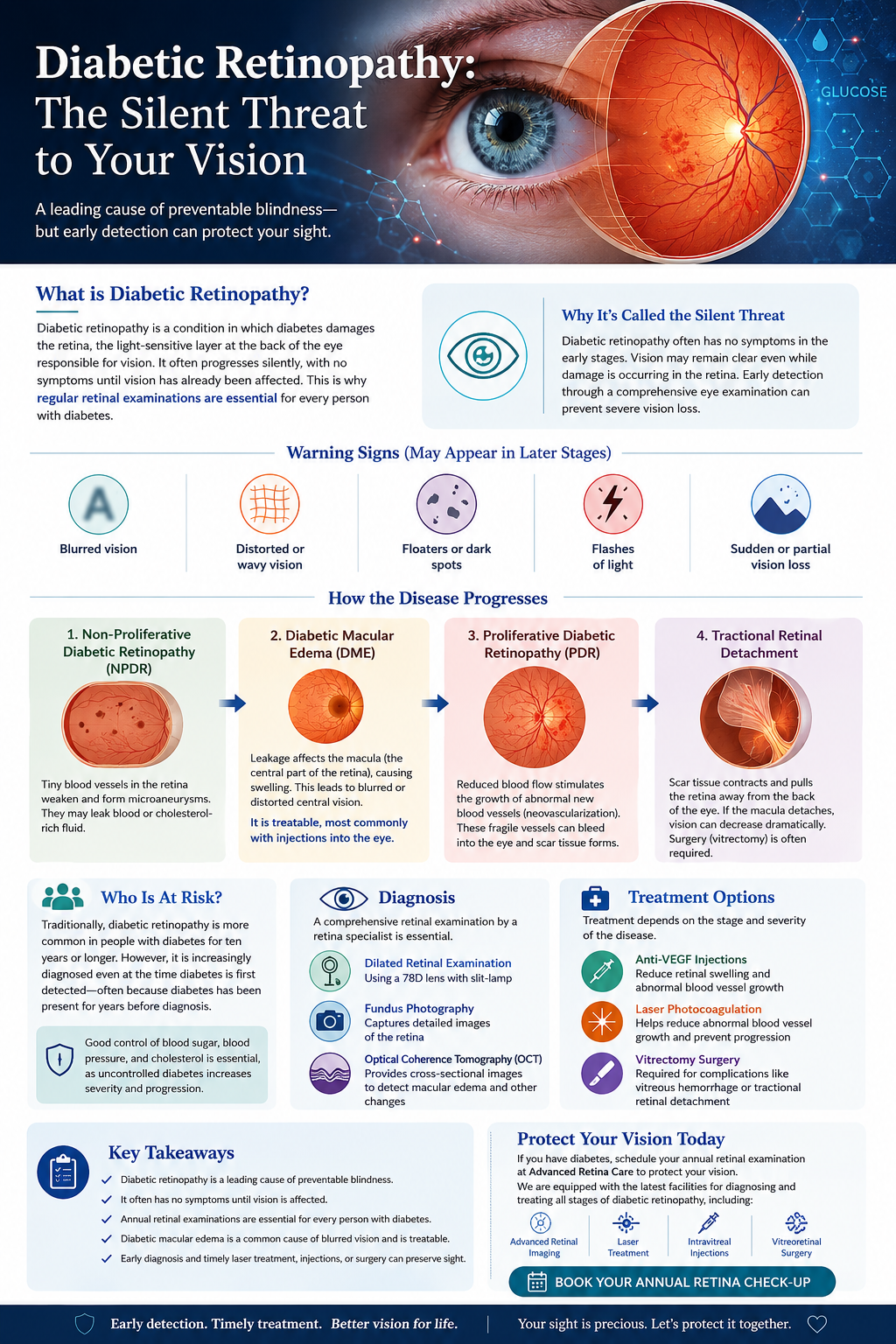
Diabetic retinopathy is one of the leading causes of preventable blindness among people with diabetes. It is a condition in which diabetes damages the retina—the light-sensitive layer at the back of the eye responsible for vision. The tragedy of diabetic retinopathy is that it often progresses silently, with no symptoms until vision has already been affected. This is why regular retinal examinations are essential for every person with diabetes.
Why Is Diabetic Retinopathy Called a 'Silent' Threat?
In its early and moderate stages, diabetic retinopathy causes subtle damage to tiny retinal blood vessels without causing pain, eye redness, or immediate changes in visual clarity. A person can have microaneurysms, hemorrhages, and fluid leakage inside the retina while still enjoying 20/20 vision.
By the time symptoms like blurred vision, floaters, or dark patches appear, the condition has often reached an advanced stage—such as severe non-proliferative diabetic retinopathy (NPDR) or proliferative diabetic retinopathy (PDR). Once permanent structural damage or vitreous bleeding occurs, restoring lost vision becomes much more difficult. Early detection through dilated retinal screening is the only way to catch it before vision is compromised.
Key Risk Factors That Accelerate Retinal Damage
While anyone with Type 1 or Type 2 diabetes can develop retinal damage, certain key risk factors significantly accelerate progression:
- Duration of Diabetes: The risk increases dramatically after 10 years of living with diabetes.
- Uncontrolled Blood Glucose (High HbA1c): Persistent high blood sugar weakens capillary walls in the retina. Learn more about blood sugar control and reversibility.
- High Blood Pressure (Hypertension): Hydrostatic pressure damages fragile retinal capillaries.
- Elevated Cholesterol & Lipids: Accelerates lipid deposits (hard exudates) in the macula.
- Kidney Disease (Diabetic Nephropathy): Microvascular damage in the kidneys strongly correlates with microvascular damage in the retina.
- Pregnancy: Pregnancy can cause rapid progression of existing diabetic retinopathy.
How Often Should You Get a Retinal Exam?
Every individual diagnosed with diabetes should undergo a comprehensive, dilated eye examination by a retina specialist at least once a year. If diabetic retinopathy is detected during screening, follow-up visits may be scheduled every 3 to 6 months depending on severity. Read our step-by-step retina examination guide to know what happens during a clinical visit.
Modern Treatment Options at Advanced Retina Care
If diabetic retinopathy is detected, modern ophthalmic treatments can successfully halt or slow disease progression:
- Observation & Metabolic Control: Strict management of blood sugar, HbA1c, blood pressure, and cholesterol.
- Retinal Laser Photocoagulation: Seals leaking vessels and prevents abnormal vessel growth. Learn how a retinal laser is done.
- Intravitreal Anti-VEGF Injections: Reduces macular swelling and regression of fragile blood vessels. Explore our detailed lasers, injections, and surgery guide.
- Vitreoretinal Surgery (Vitrectomy): Performed for advanced cases with bleeding or retinal detachment.
Protect Your Vision Today
Do not wait for blurred vision or early warning signs before booking your retina examination. Schedule your annual check-up at Advanced Retina Care, Panjagutta, Hyderabad, to preserve your sight for life.